

Dangers of Electrical Short Circuits

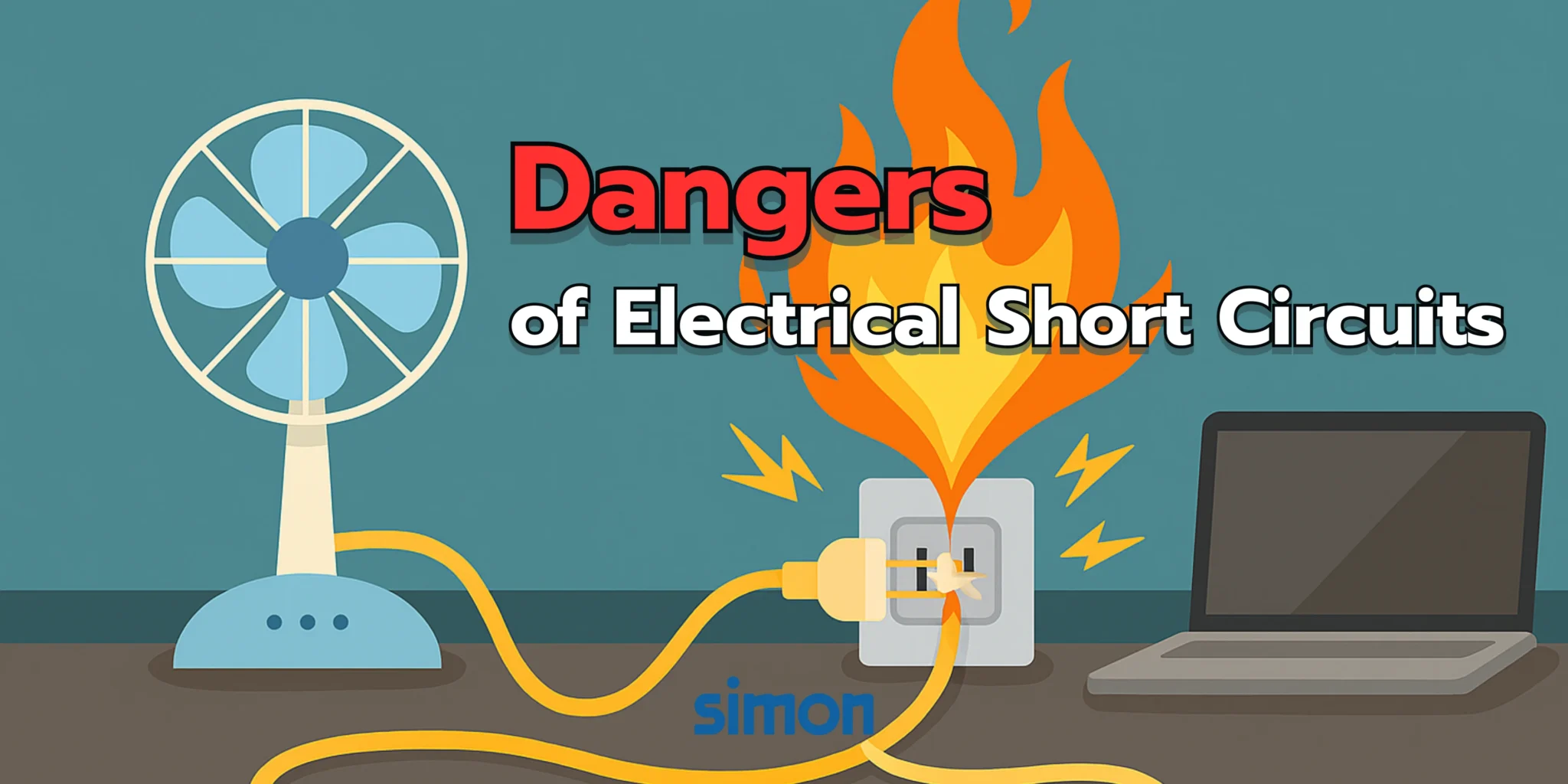
An electrical short circuit occurs when electric current flows from a high-voltage point to a low-voltage point without passing through the normal resistance in the circuit. This results in abnormally high current, generating heat and possibly sparks, which can lead to a fire.
There are two types of short circuits A short circuit between one electrical wire and another and A short circuit from an electrical wire to the ground.
Causes of Electrical Short Circuits
- Improper installation that does not meet safety standards and lacks regular inspection , such as loose switches, unstable outlets, or unsecured wiring.
- Low-quality products or damaged electrical appliances that do not meet standards, such as irons or kettles that have been used for too long or manufactured with poor quality.
- Deteriorated or damaged electrical insulation, where the plastic covering of wires is compromised, causing the electrical conductors to come into contact.
- Incorrect usage or electrical overload, such as connecting multiple power strips or using wires that are too thin for the required load.
- User-related actions
Human error during usage. Therefore, the danger caused by a short circuit is the generation of sparks and intense heat. If there are flammable materials nearby, a fire can easily occur. Additionally, as the temperature continues to rise, the insulation on electrical wires may melt, turning into fuel and further contributing to the outbreak of a fire.

Preventive Measures
Choosing high-quality electrical equipment that meets the manufacturing standards set by the Thai Industrial Standards Institute (TISI) is essential. Switches and plugs from SAHN are certified for safe use. Installation should be carried out by qualified professionals to prevent operational issues and reduce the risk of short circuits.
Typically, household electrical systems are equipped with protective devices such as circuit breakers or fuses, which safeguard against short circuits and electrical overloads. Additionally, earth leakage circuit breakers (ELCBs) are used to protect against electric shocks. These devices function by disconnecting the electrical circuit when abnormalities occur. However, if these protective devices fail to operate properly, a short circuit or electrical overload can generate heat or sparks, potentially leading to a fire.
Summary of Short Circuit Prevention Guidelines
- Use high-quality electrical equipment that meets TISI (Thai Industrial Standards Institute) standards.
- Install wiring and electrical devices according to safety standards.
- Design and install electrical systems by knowledgeable and qualified professionals.
- Use electrical appliances properly and as intended.
- Perform regular maintenance and inspections of electrical systems and devices.
- Install circuit breakers that automatically cut off power when abnormalities occur, helping prevent short circuits.
- If any electrical wires or devices are found to be damaged, do not use them. Replace or repair them immediately by a qualified technician.

