
Zigbee vs Wi-Fi Smart Switches: Which One Actually Works Better for Your Home?


You’ve decided to upgrade to smart switches. You’ve looked at a few options online. And then you hit a wall — some say Zigbee, some say Wi-Fi, and suddenly what seemed like a simple home upgrade feels like a university IT course. Don’t worry. By the end of this article, you’ll know exactly which technology fits your home — and why it matters more than the switch design itself.
First, What Are We Actually Talking About?
Both Zigbee and Wi-Fi are wireless communication protocols — the language your smart switch uses to talk to your phone, your router, or your smart home system. But they work very differently.
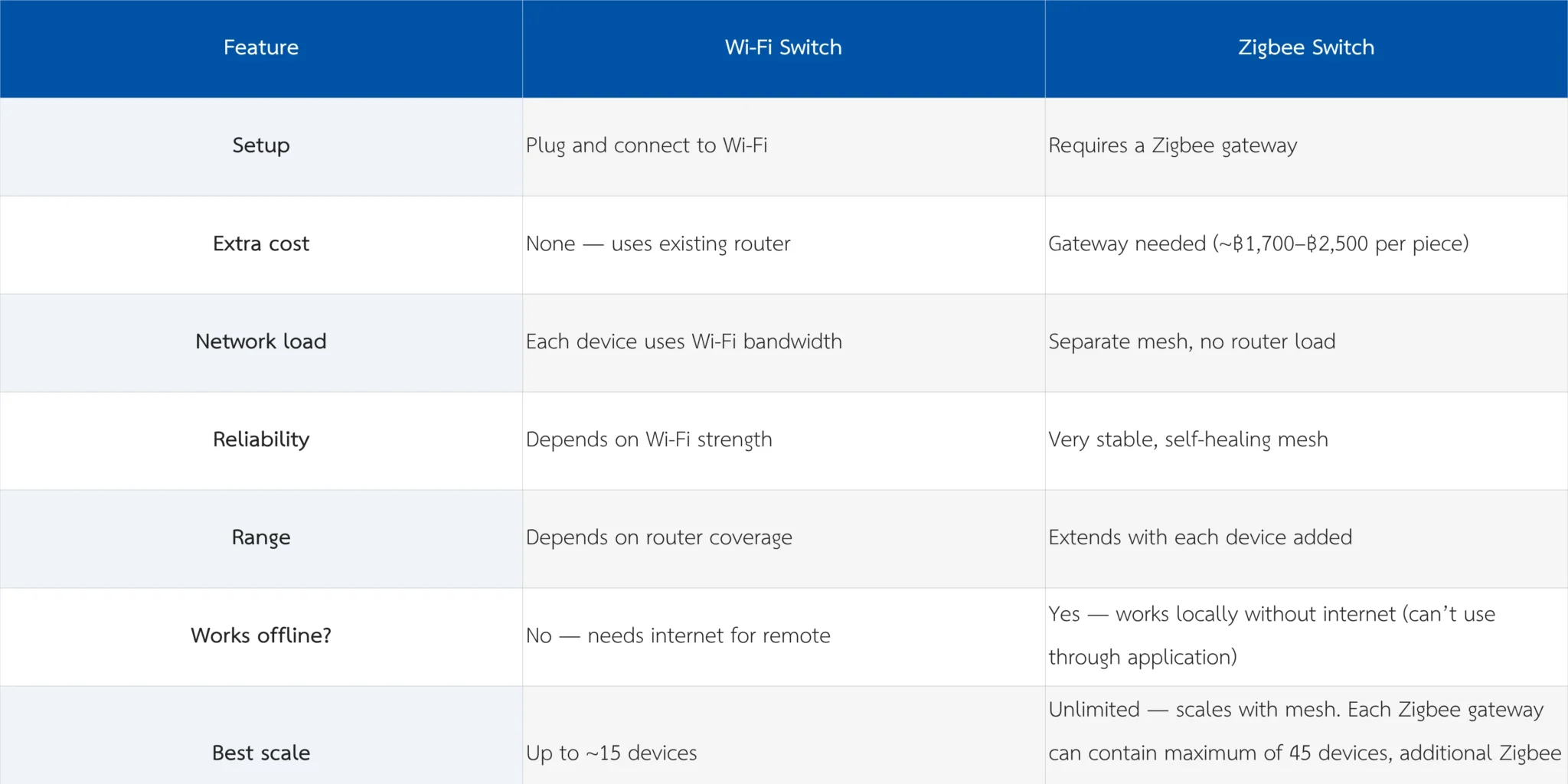
Wi-Fi smart switches connect wirelessly directly to your home router, just like your phone or laptop does. No middleman, no extra equipment. You install the switch, download the app, connect to your 2.4GHz Wi-Fi network, and you’re done.
Zigbee smart switches use a completely different, low-power radio signal. They don’t connect to your router directly — instead, they form a ‘mesh network’ where each device talks to the nearest one, passing signals along like a relay race. To connect that mesh to your phone and the internet, you need a central hub (also called a Zigbee gateway).
Wi-Fi Smart Switches: Simple, Familiar, Ready Now
If you want to start smart and fast — Wi-Fi is your answer. The setup is quick, the app control works immediately, and most Wi-Fi smart switches are compatible with Google Home and Amazon Alexa out of the box.
The tradeoff? Each device holds its own Wi-Fi connection. If you have 10+ smart devices, your router may slow down. Wi-Fi switches also tend to draw slightly more power, and if your internet goes down, you lose remote control.
Best for: Apartments, condos, homes with under 15 smart devices, first-time smart home users.
Zigbee Smart Switches: Built for the Long Game
Zigbee was designed specifically for smart homes. It runs on a separate 2.4GHz band (not shared with your Wi-Fi), uses far less power, and its mesh network means the more Zigbee devices you have, the stronger and more reliable the whole system becomes.
The catch is that upfront setup: you need a Zigbee gateway. Once the hub is in place, adding more switches is quick. And because Zigbee doesn’t rely on your internet connection to function locally, your switches still work even when the internet is down.
Best for: Houses, large condos, new construction, smart home enthusiasts, long-term setups with 15+ devices.
Side-by-Side: The Real Differences
What About Simon Smart Switches?
Simon’s i7 and M7 series offer smart modules in Zigbee 3.0 protocol. The M7 Smart range covers Zigbee-based smart switches (1, 2, 3, and 4-gang options), and also dimmer and other types of controller such as thermostat. Simon’s i7 and M7 frame system stays the same throughout from normal mechanical switches to smart switches. Same aesthetic. Same quality. Different brains.
So Which Should You Choose?
Simple rule: if you’re renting or furnishing one room with few devices, go Wi-Fi. If you’re renovating your whole house or planning a full smart home from scratch, invest in Zigbee from the beginning. Either way, the protocol is only as good as the switch behind it. Choose hardware that’s built to last, certified to local electrical standards (TIS/IEC), and designed to look as good as it works.
Frequently Asked Questions
Q: Do I need a hub to use a Zigbee smart switch?
A: Yes. Zigbee switches require a Zigbee-compatible hub or gateway to connect to your phone and the internet even if you have only 1 Zigbee device.
Q: Can I mix Zigbee and Wi-Fi smart switches in the same home?
A: Yes, you can but it’s not recommended since once the Wi-fi operation is down, some control in Zigbee smart switches that link to it might not work as well.
Q: Does my internet need to be on for smart switches to work?
A: For Wi-Fi switches, remote control requires internet. Zigbee switches work locally via the hub even without internet, so you can still control lights inside your home with the actual switch but cannot control via application.
Q: Which smart switch protocol works better in Thailand?
A: Zigbee is the preferred choice for full smart home projects and large condos or houses especially when the power goes down quite often.
Q: Are Simon M7 smart switches compatible with Google Home?
A: Simon smart switch modules are designed to integrate with major smart home platforms. Check simonswitch.com or contact the Simon Switch Thailand team for the latest compatibility details.
Explore the full Simon M7 smart switch collection at simonswitch.com or visit the our 4 showrooms in Bangkok and Phuket.

